

Introduction
Social media marketing continues to evolve rapidly, and in 2026, brands face more pressure than ever to stay consistent, engaging, and competitive across multiple platforms. Businesses are no longer competing only for visibility — they are competing for attention, authenticity, and meaningful engagement. While platforms like Instagram, LinkedIn, TikTok, and Facebook offer huge marketing potential, managing them efficiently has become increasingly complex.
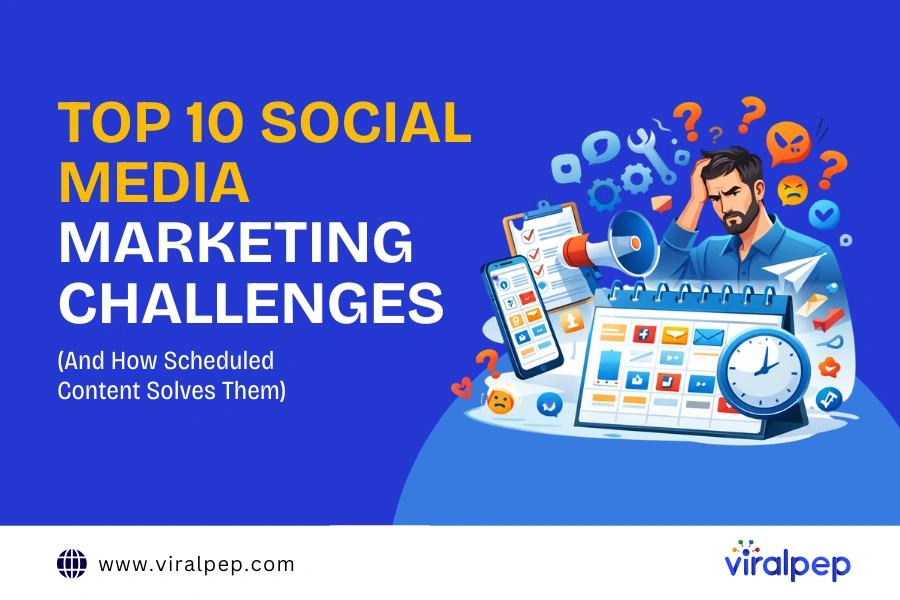
Many brands struggle with Social Media Marketing challenges such as inconsistent posting, declining engagement, content burnout, and difficulty managing multiple client accounts. These challenges not only impact brand visibility but also affect long-term marketing ROI and audience trust.
Modern marketers are now turning to automation and scheduling strategies to maintain consistency and improve performance. Platforms like Viralpep’s social media management solution help businesses streamline publishing workflows and manage multiple accounts efficiently. You can explore more social media strategies and insights on the Viralpep blog:
In this article, we will explore the most critical Social Media Marketing challenges businesses face in 2026 and how scheduled content provides effective, scalable solutions.
Why Social Media Marketing Challenges Are Increasing in 2026
Social media platforms are constantly changing algorithms, introducing new formats, and increasing competition. According to industry research by HubSpot, brands must now publish consistent, personalized, and data-driven content to maintain visibility.
The increasing complexity of digital marketing makes it difficult for brands to stay organized, especially when managing multiple campaigns and platforms simultaneously. Scheduled content has emerged as one of the most effective solutions to overcome these challenges.
1. Inconsistent Posting Frequency
The Challenge
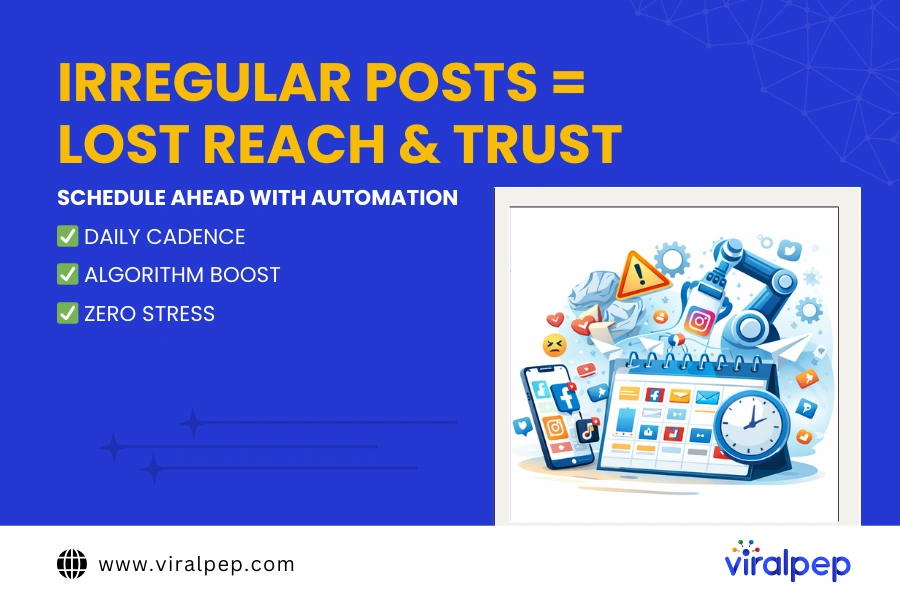
One of the biggest Social Media Marketing challenges brands face is maintaining a consistent posting schedule. Many businesses post actively during campaign launches but become inactive afterward. Inconsistent posting reduces visibility and signals poor brand reliability to audiences.
Social media algorithms favor brands that post regularly. When posting becomes irregular, reach and engagement naturally decline.
How Scheduled Content Solves It
Scheduled social media content ensures posts are published consistently, even during busy business periods. Automation tools allow marketers to prepare content in advance and maintain posting frequency across all platforms.
Scheduled content allows brands to:
- Maintain regular posting cadence
- Avoid last-minute content stress
- Improve algorithm visibility
- Build audience expectations and trust
Businesses can use automation tools like Viralpep’s scheduler to manage consistent publishing across channels.
2. Managing Multiple Client or Brand Accounts
The Challenge
Agencies and growing businesses often manage multiple social media profiles simultaneously. Tracking posting schedules, engagement, and analytics across various accounts is one of the most demanding Social Media Marketing challenges today.
Without proper planning, teams experience workflow confusion and missed posting opportunities.
How Scheduled Content Solves It
Scheduled social media content allows agencies to manage multiple accounts through centralized dashboards. Teams can organize content calendars, assign tasks, and track publishing timelines efficiently.
Automation also helps reduce human errors and ensures clients receive consistent campaign delivery.
Platforms such as Sprout Social emphasize centralized scheduling as an effective approach for simplifying multi-account management.
3. Content Creation Burnout
The Challenge
Creating high-quality content daily is exhausting for marketing teams. Content fatigue is becoming one of the most common Social Media Marketing challenges, especially with rising demands for video, carousel posts, and interactive formats.
Marketers often struggle to maintain creativity while meeting tight deadlines.
How Scheduled Content Solves It
Scheduled content allows marketers to batch create posts during creative brainstorming sessions. Instead of daily content pressure, teams can design weekly or monthly campaigns in advance.
Benefits include:
- Better content quality
- Reduced stress and burnout
- More strategic campaign planning
- Stronger brand storytelling
Content batching also allows teams to align marketing themes with seasonal campaigns and product launches.
4. Difficulty Tracking Performance Metrics
The Challenge
Many brands struggle to track and analyze social media performance effectively. Without data insights, marketing teams cannot measure ROI or optimize campaigns. This is a major Social Media Marketing challenge affecting growth.
Marketers must monitor engagement rates, reach, impressions, and conversion data to improve results.
How Scheduled Content Solves It
Scheduled social media content tools often include built-in analytics dashboards. These tools track campaign performance automatically and provide actionable insights.
According to Statista, businesses using automation tools see improved campaign performance and data accuracy
Automation tools help marketers:
- Identify top-performing content
- Adjust posting time strategies
- Optimize audience targeting
- Improve long-term ROI
5. Managing Multiple Platform Algorithms
The Challenge
Each social media platform uses different algorithms and content ranking factors. Adapting content strategies for Instagram, LinkedIn, Facebook, and TikTok is a significant Social Media Marketing challenge.
Platform updates require constant monitoring and adaptation.
How Scheduled Content Solves It
Scheduled social media content allows marketers to customize posts for each platform while maintaining unified campaign messaging.
Advanced scheduling tools provide platform-specific optimization features such as:
- Recommended posting times
- Content format adjustments
- Hashtag performance insights
- Audience engagement tracking
This ensures brands stay relevant across all platforms.
6. Time Zone and Audience Timing Issues
The Challenge
Global businesses often struggle with posting content at the right time for international audiences. Posting at incorrect times reduces visibility and engagement, making it one of the overlooked Social Media Marketing challenges.
How Scheduled Content Solves It
Automation tools allow brands to schedule posts according to audience time zones. This ensures content reaches users when they are most active.
Scheduled posting improves:
- Engagement rates
- Content reach
- Audience retention
- Campaign effectiveness
7. Lack of Content Strategy Planning
The Challenge
Many businesses publish random content without long-term planning. Lack of structured content strategy is one of the major Social Media Marketing challenges that affects brand positioning.
Without strategic planning, brands struggle to deliver consistent messaging.
How Scheduled Content Solves It
Scheduled social media content encourages structured content calendars. Marketing teams can plan campaigns based on business goals, seasonal promotions, and audience interests.
To build strong content strategies, businesses can follow structured social media planning techniques.
Content calendars help brands maintain balanced content formats including educational, promotional, and engagement-focused posts.
8. Difficulty Maintaining Brand Voice Consistency
The Challenge
When multiple team members manage social media, maintaining consistent brand tone becomes difficult. This inconsistency creates confusion among audiences and weakens brand identity.
Brand voice inconsistency is becoming a major Social Media Marketing challenge for growing businesses.
How Scheduled Content Solves It
Scheduled content allows teams to review posts before publishing. This ensures messaging aligns with brand tone and marketing objectives.
Content approval workflows help businesses maintain professional and unified communication across platforms, and team management tools like Viralpep make this process smoother by enabling teams to collaborate, review, and approve content efficiently before publishing.
9. Managing Campaign Deadlines and Promotions
The Challenge
Marketing campaigns require precise scheduling for product launches, events, and promotional offers. Missing deadlines is a costly Social Media Marketing Challenges that impacts revenue opportunities.
How Scheduled Content Solves It
Scheduled social media content helps marketers plan promotional campaigns in advance. Teams can prepare entire campaign series before launch dates.
Scheduling helps brands:
- Maintain campaign consistency
- Avoid last-minute publishing errors
- Coordinate cross-platform promotions
- Improve campaign timing accuracy
Businesses can streamline promotional scheduling and automate marketing campaigns more effectively with the advanced features offered by Viralpep, allowing teams to plan, execute, and optimize campaigns while maintaining consistent brand communication across multiple platforms.
10. Limited Team Productivity and Workflow Efficiency
The Challenge
Manual content publishing consumes valuable marketing time. Teams spend hours switching between platforms, reducing overall productivity. This is one of the most operational Social Media Marketing challenges companies face today.
How Scheduled Content Solves It
Automation improves marketing efficiency by reducing manual workload. Scheduled social media content allows teams to focus on creative strategy, audience engagement, and campaign optimization.
According to Gartner marketing research, automation significantly improves productivity and marketing ROI.
Automation tools help streamline marketing workflows and enhance collaboration among team members.
Best Practices for Implementing Scheduled Social Media Content
To overcome Social Media Marketing challenges, businesses should follow these scheduling best practices:
Create Monthly Content Calendars
Planning content monthly improves campaign consistency and marketing alignment.
Use Data-Driven Posting Strategies
Analyze audience behavior to schedule posts during peak engagement times.
Maintain Content Variety
Include educational, promotional, and interactive content formats.
Monitor Performance Analytics
Regular performance reviews help improve scheduling strategies.
Use Professional Scheduling Tools
Reliable automation platforms simplify content management and improve results.
Future Trends in Scheduled Social Media Content
Scheduled social media content is evolving with AI-driven optimization, predictive analytics, and personalized automation. Future tools will provide smarter scheduling recommendations based on audience behavior and real-time performance data.
Businesses adopting automation early will gain competitive advantages in social media marketing performance and customer engagement.
Conclusion
The digital marketing landscape in 2026 presents multiple Social Media Marketing Challenges that businesses cannot ignore. From inconsistent posting and content burnout to algorithm complexity and workflow inefficiencies, managing social media successfully requires strategic planning and advanced automation.
Scheduled social media content provides a powerful solution to these challenges by improving consistency, enhancing productivity, and delivering data-driven marketing performance. Businesses that adopt scheduling tools can focus more on creativity, engagement, and growth rather than manual publishing tasks.
If you want to simplify your social media workflow and improve marketing results, explore the advanced automation solutions offered by Viralpep. You can start with a free trial to experience its powerful scheduling, collaboration, and automation features firsthand. To unlock full capabilities, including advanced campaign management and team workflow tools, you can also explore the platform’s pricing page to find a plan that best fits your business needs.