

Introduction:
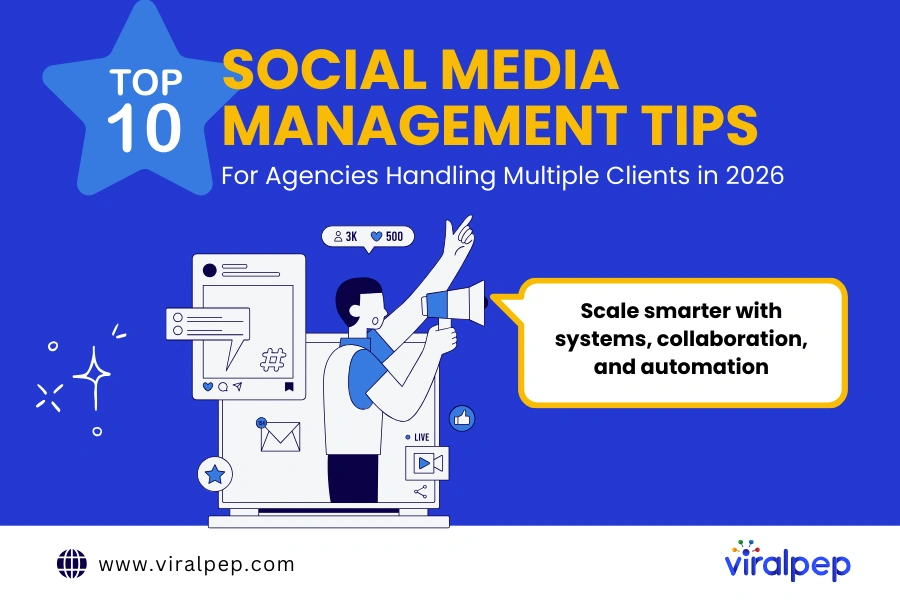
Managing social media for a single brand is already challenging, but agencies handling multiple clients face an entirely different level of complexity. From juggling different brand voices and posting schedules to tracking performance metrics across various platforms, the pressure on agencies continues to grow in 2026. With social media algorithms evolving rapidly and audience expectations becoming more personalized, agencies must adopt smarter workflows and automation tools to stay competitive.
Many marketing agencies are now shifting toward centralized management platforms and streamlined processes to reduce errors, save time, and improve campaign performance. Platforms like Viralpep help agencies automate publishing, manage multiple accounts, and monitor performance from one dashboard, making client handling significantly easier and more efficient.
Why Social Media Management is Becoming More Complex in 2026
According to recent industry research published by HubSpot, businesses are increasing their investment in multi-platform social strategies and personalized content marketing, which directly increases the workload for agencies.
Additionally, research from Sprout Social highlights that brands now expect real-time engagement, detailed analytics, and customized content strategies for every campaign.
These expectations make social media management for agencies more demanding than ever before. Without structured systems and automation, agencies risk missed deadlines, inconsistent branding, and reduced client satisfaction.
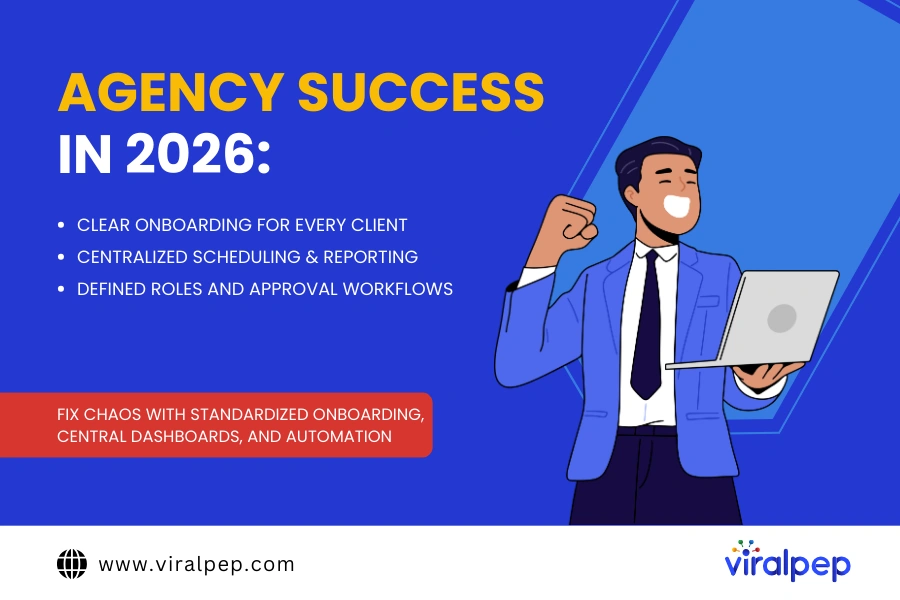
1. Create a Standardized Client Onboarding Process
Why It Matters
Managing multiple clients without a structured onboarding process often leads to confusion, unclear expectations, and repeated revisions. When agencies begin working with new clients without collecting essential brand details, teams may create content that does not align with the client’s goals, tone, or audience preferences. This misalignment can waste valuable time, delay campaigns, and reduce client satisfaction.
A standardized onboarding system ensures every project starts with clear direction, reducing guesswork and improving workflow efficiency. It also helps teams maintain consistency when handling multiple client accounts simultaneously.
Best Practices
To create a successful onboarding process, agencies should focus on collecting and organizing key information from the beginning. Important steps include:
- Gathering detailed brand guidelines, including brand voice, visual identity, and messaging style
- Identifying the client’s target audience and ideal customer profiles
- Defining content tone, communication goals, and campaign objectives
- Confirming posting frequency and preferred social media platforms
- Establishing approval workflows to streamline content review and publishing
Using structured onboarding checklists or automated onboarding forms can further improve efficiency and reduce manual errors.
Real-Life Problem Solved
Many agencies face challenges when clients request multiple content revisions because initial expectations were not clearly defined. For example, an agency managing social media campaigns for a retail brand may publish promotional content that does not match the client’s brand personality. This leads to delays, repeated revisions, and strained communication.
By implementing a standardized onboarding process, agencies can ensure all stakeholders share the same understanding from the start. This reduces revision cycles, speeds up campaign launches, and strengthens long-term client relationships.
2. Use a Centralized Social Media Management Platform
Managing dozens of client accounts across different platforms manually is nearly impossible in 2026.
Using tools designed for managing multiple social media clients workflows allows agencies to schedule posts, monitor engagement, and generate reports from one place.
Platforms like Viralpep Social Media Management Tool allow agencies to:
- Schedule content across multiple platforms
- Manage multiple client dashboards
- Automate publishing
- Track campaign performance
- Reduce manual workload
Real-Life Problem Solved
Agencies often waste hours switching between social platforms. Centralized tools reduce time and prevent posting errors.
3. Build a Content Calendar for Every Client
A well-organized content calendar ensures consistent posting and campaign alignment.
What to Include in Client Calendars
- Posting schedule
- Campaign themes
- Promotional events
- Seasonal campaigns
- Content approval deadlines
Pro Tip
Use color coding for different clients to avoid scheduling conflicts.
Real-Life Problem Solved
Agencies frequently miss posting deadlines when managing multiple accounts simultaneously. A content calendar eliminates confusion and improves efficiency.
4. Automate Repetitive Social Media Tasks
Automation has become essential for social media workflow automation in modern agencies.
Tasks You Can Automate
- Post scheduling
- Content recycling
- Performance reporting
- Audience engagement tracking
According to Hootsuite, agencies using automation tools improve productivity by up to 40%.
Real-Life Problem Solved
Manual posting increases human error and consumes valuable time. Automation allows agencies to focus more on creative strategy.
5. Maintain Separate Brand Voice Guidelines for Each Client
Every client has unique branding, messaging style, and target audience. Mixing brand tones can damage credibility.
How to Maintain Brand Consistency
- Document brand tone and style
- Maintain content examples
- Create caption writing guidelines
- Store client messaging preferences
Real-Life Problem Solved
Agencies handling multiple clients often struggle with tone consistency. Proper brand documentation prevents content confusion.
6. Use Data Analytics to Optimize Campaign Performance
Successful social media management for agencies depends heavily on data-driven decision making.
Metrics Agencies Should Track
- Engagement rate
- Audience growth
- Conversion rate
- Click-through rate
- Content performance trends
Research from Social Media Examiner shows that agencies using performance analytics consistently outperform competitors.
Real-Life Problem Solved
Agencies sometimes rely on assumptions instead of data. Analytics helps agencies prove ROI and improve client retention.
7. Implement Structured Team Collaboration Workflows
When multiple team members handle multiple clients, communication gaps can lead to publishing errors.
Effective Collaboration Methods
- Assign client managers
- Use shared dashboards
- Implement approval systems
- Maintain internal communication tools
Real-Life Problem Solved
Agencies frequently face duplicate posting or missed approvals. Structured collaboration prevents workflow breakdowns.
8. Prioritize Platform-Specific Content Strategies
Posting the same content across all platforms is no longer effective in 2026.
Platform Optimization Examples
- Instagram: Visual storytelling and reels
- LinkedIn: Professional and educational content
- Twitter (X): Real-time engagement and industry updates
- Facebook: Community engagement and ads
Real-Life Problem Solved
Agencies often lose engagement due to identical cross-platform content. Custom platform strategies improve audience connection.
9. Create Scalable Reporting Systems for Clients
Clients expect transparent and detailed performance reports.
What Clients Want in Reports
- Campaign performance metrics
- Audience growth statistics
- Content engagement analysis
- Strategy improvement recommendations
Automated reporting tools allow agencies to generate professional reports without manual effort.
Real-Life Problem Solved
Manual reporting is time-consuming and prone to errors. Automated reporting improves client trust and saves agency resources.
10. Stay Updated With Social Media Trends and Algorithm Changes
Social media trends evolve rapidly. Agencies must stay informed to maintain competitive advantage.
Ways to Stay Updated
- Follow industry research
- Monitor competitor strategies
- Attend marketing webinars
- Analyze platform algorithm updates
Real-Life Problem Solved
Agencies relying on outdated strategies lose engagement. Continuous learning helps agencies maintain strong campaign performance.
Conclusion
Managing multiple social media clients requires more than creativity – it demands organization, automation, and data-driven strategy. Agencies that adopt structured onboarding processes, centralized management platforms, automated workflows, and performance analytics consistently deliver better results and maintain long-term client relationships.
By following these practical social media management strategies, agencies can streamline daily operations, enhance campaign results, and expand their client services more effectively.Agencies looking to scale their social media operations efficiently can significantly benefit from using advanced management platforms like Viralpep. The platform helps agencies centralize client account management, automate publishing schedules, streamline team collaboration, and monitor performance analytics from a single dashboard. This not only reduces manual workload but also ensures consistent content delivery, improved campaign performance, and stronger client satisfaction. Agencies aiming to handle multiple clients without increasing operational complexity can explore Viralpep’s powerful automation features and flexible plans by visiting the social media management pricing planswhich are specifically designed to support growing agencies and marketing teams.