

The Evolution of Social Media Marketing
The digital landscape continues to evolve at an unprecedented pace, and 2026 marks a pivotal year shaped by emerging social media trends. Businesses that want to thrive in this competitive environment must understand that success goes far beyond simply posting content. Today’s digital marketplace demands authenticity, strategic thinking, and a deep understanding of emerging technologies that shape how audiences engage with brands online.
As we navigate through 2026, social media platforms have become more than just networking sites. They represent powerful ecosystems where commerce, community building, and content creation intersect to create unprecedented opportunities for businesses of all sizes. Whether you’re a small startup or an established enterprise, adapting to these changes isn’t optional anymore; it’s essential for survival and growth.
This comprehensive guide explores the ten most influential social media trends that are redefining how brands connect with their audiences, drive engagement, and achieve measurable business results in 2026.
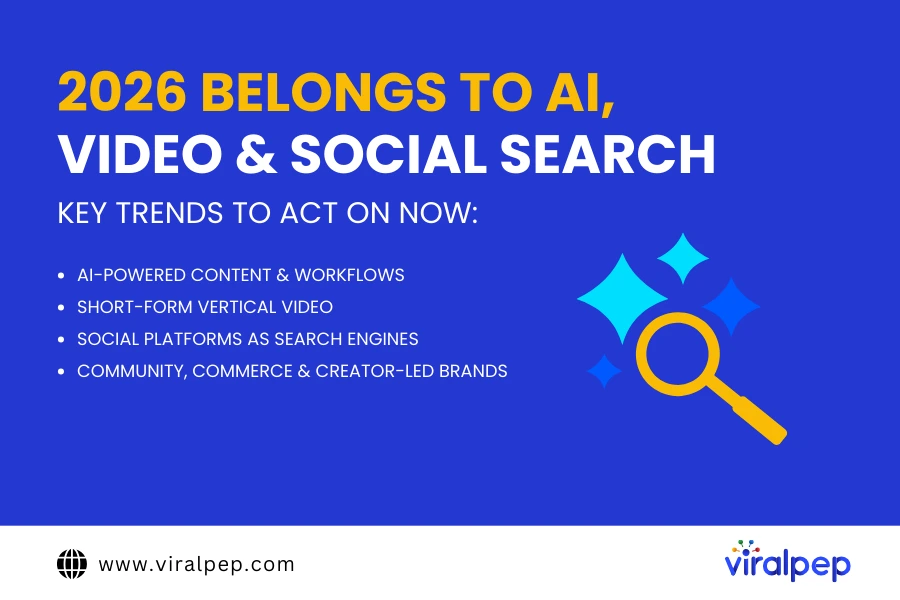
1. Artificial Intelligence Revolutionizes Content Strategy
Artificial intelligence has moved from being a futuristic concept to an everyday reality in social media marketing. Throughout 2026, we’re witnessing AI tools become indispensable partners for marketers who need to produce high-quality content consistently and efficiently.
Modern AI platforms like ChatGPT, Jasper, Copy.ai, Canva AI, and Adobe Firefly now assist marketing teams in generating compelling captions, designing eye-catching visuals, producing engaging video content, and even conceptualizing entire campaign strategies. This technological advancement doesn’t replace human creativity; rather, it amplifies it by handling time-consuming tasks and providing data-driven insights that were previously impossible to gather.
What makes AI particularly valuable is its ability to analyze massive amounts of data about audience behavior, engagement patterns, and trending topics in real-time. Marketing professionals can now understand exactly when their audience is most active, which content formats generate the highest engagement, and even predict which topics will resonate before creating the content.
However, success with AI requires balance. While automation and data analysis provide efficiency, maintaining the human touch remains crucial. Audiences can quickly detect when content feels robotic or impersonal. The most successful brands in 2026 are those that use AI as a tool to enhance creativity rather than replace it, ensuring every piece of content still carries authentic human insight and emotional resonance.
According toSprout Social’s industry research, businesses leveraging AI-powered automation see significant improvements in content personalization and engagement metrics. The key lies in using these tools strategically while preserving the unique voice and personality that makes your brand distinctive.
2. Short-Form Video Content Dominates User Attention
If there’s one undeniable truth about the latest social media trends in 2026, it’s that short-form video has become the undisputed king of content formats. Platforms like TikTok, Instagram Reels, YouTube Shorts, and even LinkedIn have fully embraced this format, and user engagement metrics prove why.
These bite-sized videos succeed because they align perfectly with modern consumer behavior. People want information quickly, entertainment instantly, and value delivered without wasting time. Short-form videos excel at all three objectives.
The benefits of this format are clear and measurable. Videos deliver quick value to viewers within the first few seconds, which is critical in an era where attention spans are shorter than ever. They generate significantly higher engagement rates compared to static posts, making them favorites of platform algorithms. Their shareability factor is unmatched, helping content go viral and reach audiences far beyond your immediate followers.
HubSpot’s comprehensive research consistently shows that video content delivers the strongest return on investment for social media marketing efforts, with 71% of marketers reporting high ROI from short-form video content. This isn’t surprising when you consider that videos combine visual storytelling, audio engagement, and emotional connection in ways that text and images alone cannot achieve.
For brands looking to maximize their impact in 2026, investing in creative, informative, and entertaining short videos is non-negotiable. Tutorial content performs exceptionally well, as do product demonstrations, behind-the-scenes glimpses into your business operations, and educational content that teaches viewers something valuable. The key is maintaining authenticity while delivering value in every frame.
3. Social Platforms Emerge as Primary Search Engines
One of the most significant social media trends we’re observing in 2026 is how younger demographics have fundamentally changed their search behavior. Rather than turning to traditional search engines like Google for information, they’re increasingly using social media platforms as their primary discovery tools.
This transformation has profound implications for how businesses approach content creation and search engine optimization. Social media users now search for product reviews, step-by-step tutorials, local business recommendations, and industry tips directly within their favorite social platforms.
TikTok, YouTube, and Instagram have evolved beyond simple social networks into comprehensive discovery platforms where people research purchases, find service providers, learn new skills, and stay informed about trends in their industries of interest.
To capitalize on this trend, brands need to rethink their content strategy through a search optimization lens. This means crafting captions that incorporate relevant keywords naturally, using searchable hashtags that align with what your audience is actively looking for, creating educational content that answers common questions, and directly addressing the queries and concerns your target audience expresses online.
Social search optimization represents one of the biggest digital marketing opportunities available to brands in 2026. Those who optimize their content for discoverability within social platforms gain a competitive advantage by appearing exactly where their potential customers are already looking for solutions. For foundational search best practices,Google’s Search Central documentation offers authoritative guidance that applies equally to social content strategy. For businesses looking to develop a comprehensive approach, creating a powerful social media marketing strategy is essential for maximizing this opportunity.
4. Authenticity Becomes the Foundation of Brand Trust
Modern consumers have become remarkably sophisticated in their ability to recognize marketing tactics. In 2026, audiences actively seek genuine, transparent content rather than polished, overtly promotional material that feels manufactured or insincere.
Authenticity in social media marketing encompasses several key elements. It means showcasing real customer experiences rather than scripted testimonials. It involves sharing honest brand stories, including the challenges and lessons learned along your business journey. Employee-generated content provides an insider perspective that audiences find refreshingly genuine. User-generated reviews and testimonials carry far more weight than branded messaging because they come from unbiased sources.
When brands demonstrate genuine values, operate with transparency, and create emotional connections with their audience, they build trust that translates into long-term customer relationships and brand loyalty. This is backed by Nielsen’s global consumer trust research, which consistently shows that peer recommendations and authentic content outperform traditional advertising in driving purchase decisions. This authentic approach generates higher engagement rates, stronger customer retention, and more effective word-of-mouth marketing. Understanding how to boost your social media engagement through authentic content is crucial for building these meaningful connections.
The businesses thriving in 2026 are those willing to be vulnerable, honest, and real with their audiences. They don’t hide mistakes; they acknowledge them and show how they’re improving. They don’t pretend to be perfect; they demonstrate continuous growth and commitment to serving their customers better.
5. Community-Centered Marketing Replaces Follower-Focused Strategies
The paradigm of social media marketing has shifted dramatically from simply accumulating large follower counts to building engaged, passionate communities around specific interests and values. In 2026, smart brands recognize that ten thousand highly engaged community members are far more valuable than one million passive followers.
This community-focused approach manifests in several ways across different platforms. Private Facebook Groups create exclusive spaces where like-minded individuals connect over shared interests. Discord Communities offer real-time conversation and deeper relationship building. Brand-focused membership groups provide special value and access to loyal customers. Live event communities bring people together around shared experiences and interests.
Research from leading marketing firms confirms that brands with thriving online communities experience significantly higher customer loyalty, increased lifetime value, and more organic growth through referrals and recommendations.WARC Business Review’s marketing research further supports this, showing that emotionally connected communities deliver twice the lifetime value of highly satisfied but unengaged customers. The impact of social media on business extends far beyond simple metrics when communities are properly nurtured and engaged.
Communities facilitate deeper connections between brands and customers while fostering natural word-of-mouth marketing that money can’t buy. When people feel part of a community rather than just followers of a brand, they become advocates who actively promote and defend the brand within their own networks.
6. Social Commerce Transforms How Consumers Shop Online
Social media platforms have evolved into fully functional shopping destinations, fundamentally changing the path from product discovery to purchase. In 2026, the integration of commerce features across social platforms represents a major revenue channel that businesses cannot afford to ignore. This is one of the most commercially impactful social media trends reshaping digital marketing this year.
Features like Instagram Shopping, TikTok Shop, Facebook Marketplace, and live shopping events enable customers to complete purchases without ever leaving their favorite social media apps. This seamless integration removes friction from the buying process and capitalizes on impulse purchasing behavior.
Modern consumers expect convenient, instant purchasing experiences. They see a product they like while scrolling through their feed and want the ability to buy it immediately with minimal clicks. Social commerce delivers exactly this experience.
Businesses that integrate comprehensive product catalogs with their social media presence, create interactive shopping posts that showcase products in action, and develop strategic influencer marketing partnerships to amplify reach will maintain a competitive advantage throughout 2026 and beyond. The convergence of social media and e-commerce isn’t just a trend; it represents a fundamental shift in consumer behavior that will only accelerate in coming years.
7. Micro and Nano Influencers Deliver Superior Engagement
While mega-influencers and celebrities once dominated influencer marketing, 2026 has seen a decisive shift toward micro-influencers (10,000 to 100,000 followers) and nano-influencers (1,000 to 10,000 followers) who deliver more authentic connections with highly engaged audiences.
The advantages of partnering with these smaller-scale influencers are compelling and measurable. They maintain higher levels of trust with their audiences because their recommendations feel genuine rather than transactional. Their followers tend to be more targeted and aligned with specific niches or interests. Marketing costs are significantly more affordable compared to major influencers. Most importantly, engagement rates are typically much higher because their audiences feel personally connected to them.
These influencers build genuine relationships with their followers through consistent interaction, authentic content, and selective brand partnerships. When they recommend a product or service, their audience listens because they’ve earned credibility through demonstrated expertise and honest communication over time. According toHubSpot’s latest marketing research, 77% of marketers report that influencer marketing delivers better ROI than other channels, with micro and nano influencers leading this success.
For brands with limited marketing budgets or those targeting specific niche markets, micro and nano influencer partnerships often deliver better return on investment than expensive celebrity endorsements. The key is identifying influencers whose values align with your brand and whose audience matches your target customer profile. Brands should also ensure all influencer collaborations comply with theFTC’s Endorsement Guidelines to maintain transparency and protect both brand and influencer credibility.
8. Meme Marketing and Cultural Relevance Drive Virality
Memes have transcended their origins as internet jokes to become a powerful communication language that brands use to connect with audiences on a more personal, relatable level. In 2026, successful brands understand how to leverage humor and cultural moments to increase shareability and engagement. Staying on top of social media trends means knowing which memes are resonating with your audience right now.
The power of meme marketing lies in its ability to make brands feel approachable, current, and in tune with internet culture. When executed well, memes generate massive organic reach as people share funny, relatable content with their networks.
However, meme marketing requires careful navigation. Brands must stay culturally relevant and understand current online trends to avoid appearing out of touch. Using outdated memes or misunderstanding cultural context can damage brand perception rather than enhance it. The most successful meme marketers in 2026 have their finger on the pulse of internet culture, respond quickly to trending moments, and understand their audience well enough to know what will resonate. They’re not afraid to be playful and show personality, but they also know when to hold back and avoid forcing humor that doesn’t fit their brand voice.
9. Data Privacy and Ethical Marketing Build Consumer Confidence
As consumers become increasingly aware of how their personal information is collected, used, and potentially exploited, data privacy and ethical marketing practices have moved from optional considerations to essential requirements for maintaining customer trust.
In 2026, stricter privacy regulations across multiple jurisdictions and growing consumer awareness mean brands must prioritize transparent, ethical data practices. This includes respecting user data and collecting only what’s necessary, being completely transparent about how customer information is used, and avoiding aggressive tracking practices that make users feel surveilled. Marketers can reference theICO’s Guide to Data Protection as a reliable framework for understanding responsible data practices that build lasting consumer trust.
Ethical marketing goes beyond legal compliance to demonstrate genuine respect for customer privacy and autonomy. Brands that lead with ethical practices build stronger customer trust, differentiate themselves from competitors who cut corners, and position themselves for sustainable long-term growth. Consumers are increasingly willing to reward brands that respect their privacy with loyalty and advocacy, while quickly abandoning those that betray their trust. In this environment, ethical marketing isn’t just the right thing to do; it’s a smart business strategy.
10. Multi-Platform Strategies Protect Against Algorithm Changes
Relying solely on a single social media platform represents a significant risk in 2026. Algorithm changes can dramatically affect content visibility overnight, and platform-specific issues can temporarily or permanently impact your ability to reach your audience.
Successful brands develop comprehensive multi-platform content strategies that distribute their presence across multiple channels. Each platform serves different purposes and reaches different audience segments. TikTok excels at viral and entertainment-focused content. Instagram specializes in visual branding and aesthetic engagement. LinkedIn serves professional networking and B2B marketing needs. YouTube provides the ideal environment for educational and long-form content.
Social media management tools help businesses efficiently schedule posts, monitor analytics across platforms, and maintain consistent engagement without overwhelming their marketing teams. A diversified presence ensures that algorithm changes or platform-specific challenges on one channel don’t completely disrupt your social media marketing efforts. It also allows you to reach different segments of your audience where they’re most active and engaged. Advanced social media automation tools like Viralpepcan streamline multi-platform management while maintaining the personalized touch that audiences expect.
How Viralpep Helps You Act on Every Social Media Trend
Understanding Social Media Trends is important, but applying them consistently across platforms is where most brands struggle. Viralpep helps simplify this process by providing an all-in-one social media management solution used by thousands of marketers worldwide.
With features like smart content scheduling, multi-platform publishing, performance analytics, and team collaboration tools, Viralpep makes it easier to plan, publish, and track content efficiently. These tools help businesses stay consistent, understand audience behavior, and adapt quickly to changing Social Media Trends without overcomplicating their workflow.
Whether you are a solo marketer, agency, or growing business, using a structured platform like Viralpep helps turn marketing strategies into measurable results while saving time and effort. You can try Viralpep free for 15 days and then choose the plan that best fits your needs once you are confident it works for your team.