

Introduction
Social media marketing has evolved from simple brand awareness into a performance-driven digital growth engine. In 2026, businesses are no longer judged by how often they post content but by how effectively their social media strategies generate engagement, conversions, and measurable return on investment.
Modern algorithms prioritize personalized content, meaningful interactions, and user satisfaction signals. As a result, brands that rely on vanity metrics such as follower count alone often struggle to scale their marketing success. Instead, successful brands focus on tracking advanced performance indicators that provide actionable insights into audience behavior and campaign effectiveness.
To simplify performance tracking and campaign optimization, many businesses rely on centralized analytics and automation platforms. Resources available on theViralpep Social Media Management blog help marketers understand data-driven strategies that improve engagement, workflow automation, and long-term social media growth.
According to research published by HubSpot, marketers who track strategic performance metrics achieve higher conversion rates and customer retention compared to marketers who focus only on content publishing frequency.
In this comprehensive guide, we’ll explore the Top 10 Social Media Metrics Every Brand Should Track in 2026, along with practical implementation strategies, real-world challenges, and optimization techniques that help brands improve marketing performance and digital visibility.
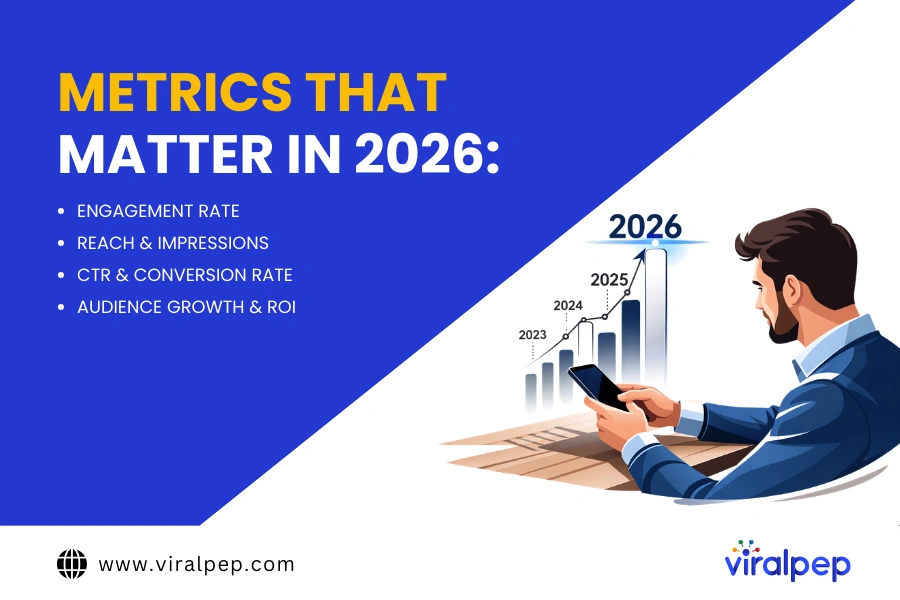
Why Social Media Metrics Are Critical for Business Growth in 2026
The digital marketing ecosystem has become highly competitive, with brands competing across multiple platforms including Instagram, LinkedIn, Facebook, TikTok, YouTube Shorts, and X (Twitter). Each platform uses advanced machine learning algorithms to prioritize content relevance and engagement quality.
Tracking the right social media performance metrics helps brands:
- Understand audience interests and behaviors
- Improve content relevance and engagement quality
- Identify high-converting campaigns
- Optimize advertising budgets
- Strengthen brand authority and online credibility
Research from Sprout Social highlights that brands using advanced analytics tools experience better audience targeting accuracy and stronger campaign performance.
1. Engagement Rate
Why Engagement Rate Is the Most Valuable Social Media Metric
Engagement rate shows how much your audience interacts with the content you share. It includes likes, shares, comments, saves, and other meaningful interactions that indicate audience interest.
How to Calculate Engagement Rate
Engagement Rate = ( Total Engagements / Total Followers ) × 100
Why Google and Algorithms Value Engagement
High engagement signals content relevance and audience satisfaction. Platforms often boost content visibility when users interact frequently with posts.
Real-World Marketing Impact
Brands that monitor engagement can identify which content formats generate the strongest audience connection. For example, educational reels and interactive carousel posts typically generate higher engagement compared to promotional posts.
2. Reach
Understanding Audience Exposure
Reach indicates the size of the audience that has viewed your post or message. It reflects your brand’s visibility and audience expansion potential.
Why Reach Matters for Brand Awareness
Higher reach means greater brand exposure, especially when launching new campaigns, products, or services.
According to Hootsuite research, reach is one of the strongest indicators of brand discoverability in competitive digital markets.
Common Challenge Solved
Many brands struggle to expand their audience beyond existing followers. Tracking reach helps identify content strategies that attract new users.
3. Impressions
Measuring Content Visibility Frequency
Impressions track how often your content appears on users’ screens, regardless of interaction.
Reach vs Impressions
- Reach shows unique audience size
- Impressions show total content exposure frequency
Strategic Importance
High impressions indicate strong content distribution and algorithm support, especially for trending or viral content formats.
4. Conversion Rate
Turning Engagement into Revenue
Conversion rate measures how many users take a desired action after interacting with social media content.
Examples of Social Media Conversions
- Product purchases
- Website visits
- Newsletter subscriptions
- Lead generation
- App downloads
Real Marketing Problem Solved
Many brands generate strong engagement but fail to convert audiences into customers. Conversion tracking helps marketers focus on revenue-driven strategies.
5. Click-Through Rate (CTR)
Measuring Content Effectiveness
CTR tracks how often users click links within social media posts or advertisements.
CTR = (Total Clicks ÷ Total Impressions) × 100
Why CTR Is Essential in 2026
CTR reflects content relevance, headline effectiveness, and call-to-action performance.
Optimization Tips
- Use curiosity-driven headlines
- Add strong call-to-action buttons
- Include visual storytelling elements
6. Audience Growth Rate
Measuring Brand Expansion
Audience growth rate shows how quickly your follower base is expanding over time.
Why Growth Rate Matters More Than Follower Count
Follower count alone is considered a vanity metric. Growth rate indicates whether marketing strategies successfully attract new audiences.
Research from Social Media Examiner confirms that consistent audience growth correlates strongly with long-term brand authority.
7. Customer Response Time
Importance of Real-Time Brand Communication
Customer response time measures how quickly brands reply to comments, messages, and inquiries.
Why Response Speed Impacts Marketing Success
Modern consumers expect instant brand communication. Faster response time improves customer satisfaction, trust, and retention.
Business Benefit
Brands with strong customer interaction often experience higher loyalty and conversion rates.
8. Share of Voice (SOV)
Measuring Brand Market Authority
Share of Voice tracks how often your brand is mentioned compared to competitors across social media conversations.
Why SOV Matters for Competitive Analysis
Higher Share of Voice indicates stronger brand awareness and industry authority.
Strategic Advantage
Monitoring competitor mentions helps marketers identify emerging industry trends and positioning opportunities.
9. Video Performance Metrics
Why Video Dominates Social Media in 2026
Short-form video continues to dominate digital marketing across Instagram Reels, TikTok, and YouTube Shorts.
Key Video Metrics to Track
- Watch time
- Completion rate
- Audience retention
- Video engagement rate
ZIGHT shows that video marketing significantly increases brand recall and purchase decision influence.
Marketing Benefit
Tracking video analytics helps brands improve storytelling, visual quality, and audience retention strategies.
10. Social Media ROI
The Ultimate Performance Measurement
Social Media ROI measures the financial return generated from social marketing investments.
ROI Formula
ROI = (Revenue Generated – Marketing Cost) ÷ Marketing Cost
Brands can simplify ROI tracking using automated reporting and performance dashboards available through Viralpep.
Why ROI Is Crucial for Business Growth
ROI tracking helps marketers justify budgets, optimize campaign performance, and improve long-term marketing strategies.
Advanced Social Media Metrics Brands Should Also Monitor
Sentiment Analysis
Tracks audience emotions and brand perception based on social media conversations and comments.
Cost Per Click (CPC)
Measures advertising efficiency and helps optimize paid campaign budgets.
Content Performance Trends
Analyzes long-term performance patterns to identify high-performing content formats.
Major Challenges Brands Face While Tracking Social Media Metrics in 2026
- Managing data across multiple platforms
- Identifying meaningful performance indicators
- Adapting to frequent algorithm updates
- Handling increasing content demand
- Measuring long-term marketing ROI
Managing Data Across Multiple Platforms
With brands actively using multiple social media platforms, consolidating performance data often becomes overwhelming. Each platform provides analytics in different formats, making it difficult to maintain a unified performance overview. To overcome this challenge, brands should invest in centralized analytics or social media management tools that aggregate data from multiple channels into a single dashboard. Creating standardized reporting frameworks also helps teams compare performance metrics consistently across platforms, allowing marketers to make faster, data-driven decisions without wasting time manually compiling reports.
Identifying Meaningful Performance Indicators
Many brands struggle with tracking vanity metrics such as likes or impressions without understanding their true business impact. The key to overcoming this challenge lies in aligning social media metrics with business goals. Brands should clearly define whether their focus is brand awareness, lead generation, conversions, or customer retention. By prioritizing actionable metrics such as engagement rate, conversion rate, customer acquisition cost, and customer lifetime value, marketers can measure the real impact of their campaigns rather than relying on surface-level engagement numbers.
Adapting to Frequent Algorithm Updates
Social media algorithms continue to evolve, often reducing organic reach and changing content visibility rules. Brands can overcome this challenge by diversifying their content strategy instead of relying on a single format or platform. Regular performance testing, audience behavior analysis, and staying updated with platform announcements help marketers quickly adapt to algorithm changes. Additionally, focusing on creating high-quality, audience-focused, and interactive content helps maintain visibility regardless of algorithm fluctuations.
Handling Increasing Content Demand
The growing need for consistent and engaging content across multiple platforms places significant pressure on marketing teams. To manage this demand effectively, brands should implement structured content planning through editorial calendars and batch content production strategies. Repurposing high-performing content into different formats, such as converting blog posts into videos or infographics, also helps maximize content value while reducing workload. Leveraging AI-powered content assistance and workflow automation can further streamline production and scheduling processes.
Measuring Long-Term Marketing ROI
Tracking the long-term return on social media investments remains challenging due to delayed conversions and multi-touch customer journeys. Brands can overcome this issue by implementing advanced attribution models that track customer interactions across multiple touchpoints. Integrating social media analytics with CRM systems and marketing automation platforms enables businesses to connect engagement data with actual revenue outcomes. Monitoring long-term indicators such as brand loyalty, customer retention, and lifetime value helps provide a more accurate picture of social media ROI beyond immediate campaign results.
Best Practices for Tracking Social Media Metrics
Use Integrated Analytics Platforms
Centralized dashboards allow brands to monitor performance across multiple social media platforms efficiently.
Set Clear Marketing Objectives
Tracking metrics without defined goals leads to inaccurate performance evaluation.
Analyze Metrics Regularly
Weekly and monthly performance monitoring helps identify growth opportunities and campaign improvements.
Focus on Actionable Data
Brands should prioritize metrics that directly influence business growth rather than vanity statistics.
Conclusion
Tracking the right social media metrics every brand should track in 2026 is essential for building effective marketing strategies and achieving sustainable business growth. Metrics such as engagement rate, reach, conversion rate, CTR, audience growth, and ROI provide valuable insights that help brands improve content quality, strengthen customer relationships, and increase revenue.
By leveraging advanced analytics tools and automation solutions like Viralpep, brands can simplify performance tracking, automate reporting processes, and optimize marketing campaigns more efficiently. Businesses that prioritize data-driven decision-making will remain competitive and continue to grow in the evolving social media landscape.